
Inventory Management for Multi-Warehouse Businesses
Do you spend a huge amount of time managing your products across multiple storage locations?
Managing inventory across multiple locations is a major challenge for businesses. Coordinating several warehouses and logistics facilities requires strong organization, accurate tracking, and constant responsiveness. The key to effective management lies largely in using the right inventory management software to centralize and synchronize inventory levels and warehouse operations.
In this article, we will explore the importance of inventory management for businesses operating across multiple storage locations, the challenges they face, and how specialized software can make day-to-day management easier.
What Is Multi-Warehouse Inventory Management?
Multi-warehouse inventory management encompasses all the practices used to monitor, organize, and control the quantities of products or goods held by a business across multiple storage locations.
For example, this can range from small artisan businesses managing inventory in limited spaces, such as a garage or a vehicle, to larger businesses, including small and medium-sized enterprises, with warehouses, offices, or storage facilities spread across different countries.
Having multiple warehouses offers several advantages: businesses can respond more quickly to shipping needs, stay closer to their customers, reduce storage costs in certain countries or locations, and more.
Challenges of Multi-Warehouse Inventory Management
Businesses operating across multiple warehouses face a number of challenges that can directly impact their profitability and reputation:
- Stockouts
- Overstocking
- Transportation costs
- Order fulfillment across multiple locations
- Logistics efficiency
- Having clear visibility into inventory levels to meet customer demand
Stockouts can lead to lost sales and frustrated customers, while overstocking ties up valuable resources. Transportation costs between different locations can also quickly add up and negatively impact profit margins.
Poor inventory management across multiple warehouses can therefore have costly consequences, ranging from lost revenue to lost customers.
It is therefore essential to closely monitor the movement of goods between these different storage locations, ensure real-time product availability at each site, and coordinate replenishment efficiently. You also need to take each location’s specific characteristics into account, such as differences in demand, varying storage costs, and the specific needs of each customer base.
The Benefits of Centralized Inventory Management
Being able to centralize all your inventory offers several advantages:
- Real-time visibility: track inventory movements and stock levels in real time. Key indicators can also alert you when stock levels are running low.
- Easier replenishment: when the reorder point is reached, an alert can be set up to trigger a replenishment process. Alternatively, inventory from other storage locations can be used to avoid running out of stock.
- Easier order fulfillment
The overall objective is twofold: to avoid overstocking, where the company is left with slow-moving inventory that is difficult to sell, while also preventing stockouts that could result in lost sales or even lost customers.
Centralized inventory management therefore helps optimize stock levels to meet demand while avoiding excess inventory and shortages, ultimately improving profitability and customer satisfaction.
The Benefits of Inventory Management Software
To effectively manage the challenges of multi-site inventory management, using inventory management software is the ideal solution. These tools are designed to address the complexities faced by businesses that manage, sell, and replenish inventory.
Here are some of the features that help solve these challenges:
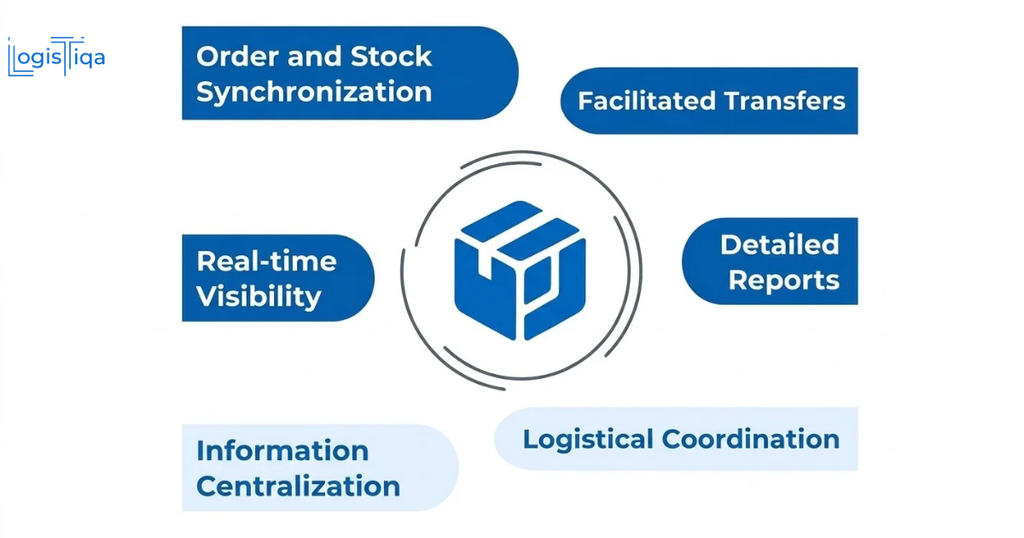
- Instant visibility: inventory is broken down by storage location and product location, providing real-time visibility into available quantities, incoming stock (pending purchases), and inventory reserved for customer orders.
- Synchronization between orders and inventory: stock levels are automatically updated when products are purchased or sold.
- Easy inventory transfers between warehouses: inventory can be transferred without the risk of errors (for example, an electrician taking tools from a storage location and putting them in their truck).
- Centralized product, customer, and supplier records: all this information can be accessed from the software for every storage location.
- Inventory analysis (margins, valuation) by storage location, making it possible to compare the performance of each site.
The main objective of this software is to automate tasks and eliminate human error. It therefore contributes to more efficient inventory management by taking into account the specific characteristics of each site. This, in turn, reduces transportation costs, improves delivery times, and prevents inventory problems from simply being shifted to another storage location, potentially causing stockouts. Ultimately, customer satisfaction and overall business profitability are significantly improved.
Logistiqa, a Simple Solution for Managing Your Inventory and Sales
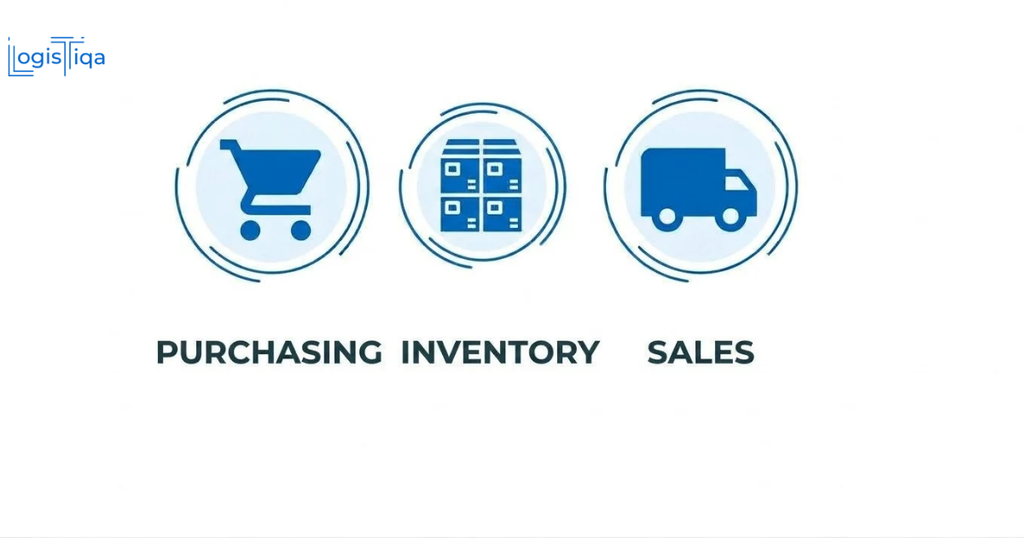
Logistiqa is a management solution designed to help small businesses, distributors, artisans, and cooperatives better manage their inventory, purchases, and sales on a daily basis.
With centralized management, users can track their products, monitor inventory movements, and maintain better visibility over their operations. The goal is to simplify day-to-day management and avoid having to rely on multiple Excel files or different tools.
In addition to inventory tracking, Logistiqa allows businesses to manage their main commercial operations, including quotations, purchase orders, delivery notes, sales, and invoices. Users can also keep track of their customers, purchases, and transaction history.
With Logistiqa, businesses can:
- track their inventory and get better visibility into available products;
- manage their purchases and keep a record of transactions;
- record their sales and track completed transactions;
- manage customers and suppliers from a single platform;
- create quotations, purchase orders, delivery notes, and invoices;
- view transaction history to quickly find the information they need;
- centralize management information to make it easier to monitor business activity on a daily basis.
Logistiqa helps businesses organize their operations in a single tool and gain a clearer view of their activity without making day-to-day management more complicated.
Coordinated inventory management is essential for multi-site businesses to ensure profitability and customer satisfaction. Centralizing inventory management through specialized software is crucial for addressing the main challenges these businesses face by reducing costs, optimizing inventory levels, and improving communication with sales teams and customers
.
With solutions like Logistiqa, multi-site businesses can achieve more efficient, seamless, and transparent inventory management.
Contact us by email info@logistiqa.co