Lean Inventory Management: How Does This Method Work?
Ordering 500 units to feel safe for the next six months may seem reassuring. But during those six months, these products take up space, tie up cash flow, and may sell less well than expected.
Lean inventory management follows a different approach. The company aims to maintain low inventory levels and replenish products when they are actually needed. This method, often associated with Just-in-Time (JIT), helps limit overstocking and the costs that come with it.
On paper, the principle seems simple. In reality, working with less inventory also leaves less room to respond when demand suddenly increases or a supplier is delayed.
How does lean inventory management work? Which businesses can benefit from it? And how can you reduce inventory without increasing stockouts?
What Is Lean Inventory Management?
Lean inventory management involves sourcing and replenishing goods as close as possible to the time they will be used, sold, or shipped. This allows the company to avoid building up several weeks or months of inventory without an identified need.
In a B2B distribution business, for example, this means regularly ordering smaller quantities from suppliers rather than filling the warehouse in anticipation of all sales for the coming months.
In manufacturing, the principle is similar. Components and raw materials arrive shortly before they are needed, avoiding having them tied up in inventory for a long period.
The goal is therefore not necessarily to have zero inventory. A company can maintain minimum stock levels or safety stock for certain critical items. The main objective is to shorten the time between purchasing a product and using or selling it.
Lean Inventory Management and the Just-in-Time Method
Lean inventory management is closely linked to the Just-in-Time method, known as JAT in French and JIT for Just-in-Time in English. Both concepts are based on the same principle: having goods or components available when they are needed, while limiting unnecessary inventory.
The Just-in-Time approach was notably developed in industry through the Toyota Production System. Its principle is based on having raw materials or components arrive when they are needed for production, in quantities that are as close as possible to the actual requirement.
Today, this approach extends far beyond industrial manufacturing. It can also be used to manage procurement and inventory for a distributor, wholesaler, or SME that resells finished products.
In practice, lean inventory management refers more specifically to the operational application of the JIT method, which represents the broader strategic approach.
How Does Lean Inventory Management Work?
Let’s take the example of an SME that distributes professional equipment to resellers.
One of its best-selling products is sold around 200 times per month. Until now, the company ordered 600 units every three months. As a result, part of its cash flow remained tied up in boxes that sometimes sat in the warehouse for several weeks.
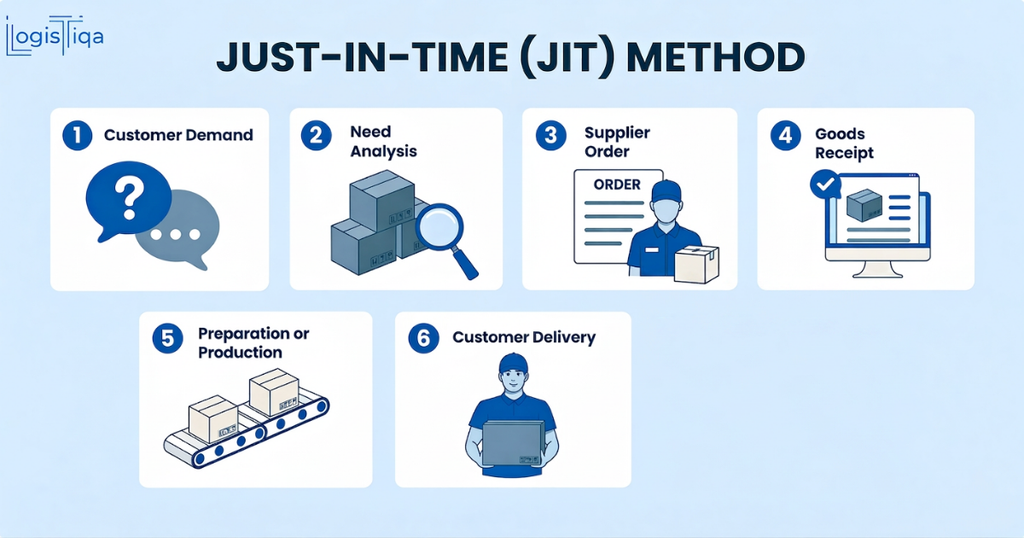
With lean inventory management, the company changes its purchasing rhythm. It orders 100 or 150 units more regularly, based on its actual sales.
Inventory decreases, a new supplier order is triggered, the products are received and then quickly sold. The cycle starts again.
This organization works as long as the different elements remain synchronized. Inventory levels must be accurate. Supplier lead times must be known. Sales must be monitored regularly, and purchases must be triggered early enough.
A delay of just a few days can quickly change the situation.
Imagine that the supplier normally delivers within four days. On a Monday morning, the SME receives an exceptional order for 80 units from a customer. It expects to replenish its inventory as planned, but on Wednesday, its supplier announces a three-day delay.
With 300 safety units in the warehouse, the incident would be almost unnoticeable. With only 40 units available, every day counts, because a delay can weaken the business relationship and even result in losing a customer.
Push, pull, and lean flows: what are the differences?
Push Flow Anticipates Demand
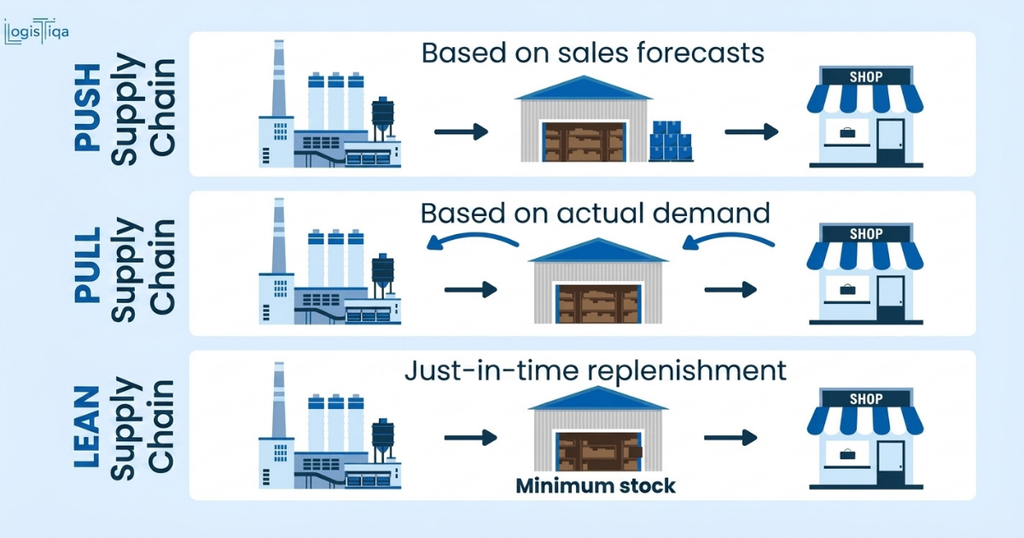
In a push-flow organization, the company purchases or produces based on forecasts.
If it expects to sell 3,000 units over the next three months, it manufactures or orders those 3,000 units before receiving the corresponding orders. The finished products are then stored until they are sold.
This method makes it easier to anticipate demand when demand is relatively predictable. However, it increases the risk of overstocking when forecasts do not materialize.
Pull Flow Starts from an Actual Need
Pull flow works in the opposite way. A customer order, material consumption, or production requirement triggers the action upstream.
The company therefore produces or replenishes inventory based on a signal from actual demand. This method is more suitable when the customer can accept a longer lead time between ordering and delivery, since replenishment or production is triggered by the actual need.
Lean Flow Aims to Reduce Waiting Time Between Steps
Lean flow mainly describes how goods move through the company. Intermediate inventory levels are reduced, and replenishment is brought closer to the time when products are actually needed.
In practice, lean inventory management often tends to follow a pull-flow logic while relying on Just-in-Time principles. However, companies can also retain a degree of forecasting to anticipate seasonality or certain changes in demand.
Which Businesses Is Lean Inventory Management Suitable For?
The method can be used by an SME. It is not limited to large industrial companies.
It works particularly well when demand is relatively consistent, supplier lead times are short and reliable, and the company has good visibility into its sales and inventory levels.
Consider a B2B distributor that orders its products from a French supplier capable of delivering within three days. Sales are consistent and inventory levels are monitored daily. Gradually reducing the available inventory may make sense.
The situation is different for a company importing a specific component with a three-month lead time, or whose sales can suddenly increase during certain periods. In this case, significantly reducing safety stock creates a greater risk of stockouts.
Lean inventory management therefore does not necessarily have to be applied to the entire product catalog. A company can use it for its most predictable products while maintaining higher safety levels for irregular, seasonal, or difficult-to-replenish items.
What Are the Advantages of Lean Inventory Management?
The first benefit is quite visible in the warehouse. Fewer goods remain on the shelves waiting to be sold.
This reduces the need for storage space and the costs associated with holding inventory. Faster inventory turnover also limits exposure to products that become obsolete, deteriorate, or ultimately fail to find a buyer.
The impact also extends to cash flow and working capital requirements. Purchasing goods several months before selling them means paying the supplier well before receiving payment from the customer. With smaller orders, part of this capital remains available for other business expenses.
The Risks and Limitations of the Just-in-Time Method
Less inventory also means less protection against unexpected events.
A delayed supplier, a transportation issue, a picking error, or a defective product can lead to a stockout much more quickly. This dependence on suppliers is one of the main limitations of JIT.
Demand spikes are another sensitive area. A product that normally sells ten units per week may suddenly receive an order for fifty units. If the replenishment lead time is longer than the customer’s expected delivery time, the company must choose between delaying the delivery and finding an emergency solution.
The frequency of operations also increases. Ordering smaller quantities often means placing more supplier orders, receiving goods more frequently, and recording more inventory movements. This increase in operations can raise ordering, transportation, and receiving costs, particularly when suppliers charge fixed fees or offer less favorable rates for smaller volumes.
How Can You Successfully Implement Lean Inventory Management?
Start with the Right Products
It is rarely advisable to reduce all inventory levels overnight.
Start by analyzing products with consistent demand and suppliers with reliable lead times. A highly unpredictable product probably requires more safety stock than a product that sells every week in similar quantities. This gradual approach also allows you to verify that your data and processes can keep pace.
Know Your Actual Supplier Lead Times
A supplier saying “about a week” does not provide sufficiently precise information to manage very low inventory levels.
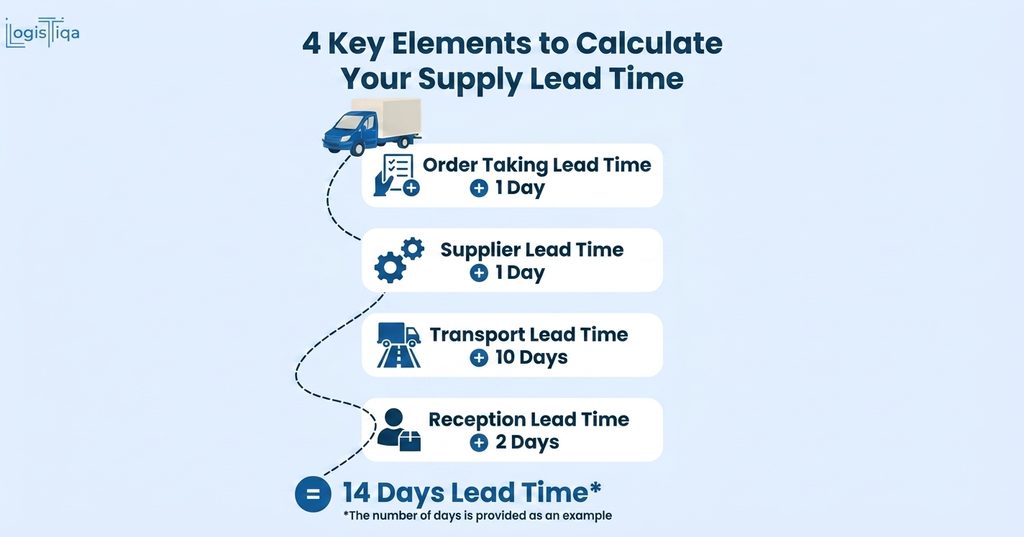
Look at the actual lead times from your most recent orders. If deliveries range from four to twelve days, your strategy needs to take this variability into account.
It is also possible to formalize commitments with certain suppliers, for example through a contract specifying the delivery times to be met. This provides greater visibility and helps secure a lean inventory management approach.
Ensure Inventory Accuracy Before Reducing It
Before reducing your available quantities, make sure that the inventory shown in your system actually matches the physical inventory.
With 500 units in stock, an error of five units may go unnoticed. With only eight units remaining and a customer order for six, however, an error can prevent the shipment from being fulfilled. Regular inventory counts and rigorous recording of receipts, issues, and returns therefore become particularly important.
Track a Few Simple Indicators
The stockout rate, actual supplier lead times, inventory turnover, and service level help determine whether reducing inventory is genuinely improving your organization.
If average inventory decreases while overdue orders increase significantly, the thresholds being used should be reviewed.
Manage Lean Inventory with Logistiqa
Lean inventory management requires purchasing decisions to be based on up-to-date data. Sales, supplier orders, and inventory levels therefore need to be monitored within the same environment.
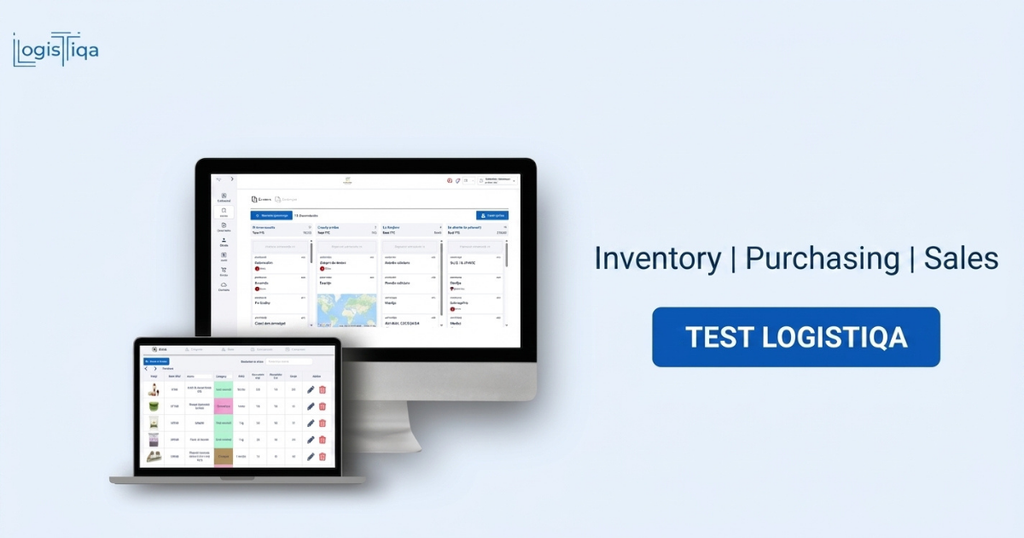
With Logistiqa, every purchase or sales order updates inventory information. Teams can view available quantities across different storage locations and track supplier orders awaiting receipt.
Reorder points also make it possible to define a replenishment threshold for each product. When an item reaches this level, you receive an alert to help trigger a new order.
For a company looking to operate with less inventory, this visibility changes the way purchasing is managed. There is no longer any need to wait until a shelf is almost empty to discover that a replenishment order should have been placed three days earlier.
Logistiqa therefore helps align purchasing more closely with actual needs while maintaining a clear view of inventory and ongoing orders.
Lean Inventory Management: How Does This Method Work?
Ordering 500 units to be safe for six months may seem reassuring. But during those six months, these products take up space, tie up cash, and may not sell as well as expected.
Lean inventory management follows a different approach. The company aims to maintain low inventory levels and replenish products when they are actually needed. This method, often associated with Just-in-Time (JIT), helps reduce excess inventory and the costs associated with holding it.
On paper, the principle seems simple. In practice, working with less inventory also leaves less room for unexpected increases in demand or supplier delays.
How does lean inventory management work? Which businesses can benefit from it? And how can you reduce inventory without increasing the risk of stockouts?
What Is Lean Inventory Management?
Lean inventory management means receiving goods as close as possible to the time they will be used, sold, or shipped. The company avoids holding several weeks or months of inventory without a clearly identified need.
For a B2B distribution company, this could mean ordering smaller quantities from suppliers on a regular basis instead of filling the warehouse with enough products to cover sales for several months.
In manufacturing, the principle is similar. Components and raw materials arrive shortly before they are needed for production, reducing the amount of time they remain in storage.
The objective is therefore not necessarily to have zero inventory. A company can maintain a minimum stock level or safety stock for certain sensitive products. The goal is mainly to shorten the time between purchasing a product and using or selling it.
Lean Inventory Management and the Just-in-Time Method
Lean inventory management is closely related to the Just-in-Time method, known as JIT. Both approaches are based on the same principle: having goods or components available when they are needed while minimizing unnecessary inventory.
Just-in-Time developed particularly in manufacturing through the Toyota Production System. Its principle is to bring materials and components into production when they are needed, in quantities as close as possible to the actual requirement.
Today, this approach goes far beyond industrial production. It can also be used to manage purchasing and inventory for distributors, wholesalers, and SMEs selling finished products.
In practice, lean inventory management generally refers to the operational application of the JIT approach, while Just-in-Time represents the broader management philosophy.
How Does Lean Inventory Management Work?
Consider an SME that distributes professional equipment to resellers.
One of its key products sells around 200 units per month. Until now, the company has been ordering 600 units every three months. As a result, part of its cash remains tied up in boxes that may sit in the warehouse for several weeks.
With lean inventory management, the company changes its purchasing rhythm. It orders 100 or 150 units more regularly, based on actual sales.
Inventory decreases, a new supplier order is triggered, the products are received and then quickly sold. The cycle starts again.
This organization works as long as the different elements remain synchronized. Inventory levels must be accurate. Supplier lead times must be known. Sales must be monitored regularly, and purchases must be triggered early enough.
A delay of just a few days can quickly change the situation.
Imagine that the supplier normally delivers within four days. On Monday morning, the SME receives an exceptional order for 80 units from a customer. The company expects to replenish its inventory as planned, but on Wednesday, the supplier announces a three-day delay.
With 300 units of safety stock in the warehouse, the incident would have little impact. With only 40 units available, every day matters because a delay could damage the business relationship or even result in losing a customer.
Push Flow, Pull Flow and Lean Flow: What Are the Differences?
Push Flow Anticipates Demand
In a push-flow organization, the company purchases or produces based on forecasts.
If it expects to sell 3,000 units over the next three months, it produces or orders those 3,000 units before receiving the corresponding customer orders. Finished products are then stored until they are sold.
This approach works well when demand is relatively predictable. However, it increases the risk of excess inventory when forecasts are inaccurate.
Pull Flow Starts with an Actual Need
Pull flow works in the opposite way. A customer order, material consumption, or production requirement triggers the action upstream.
The company therefore produces or replenishes based on actual demand. This method is more suitable when customers can accept a longer delay between ordering and delivery, since replenishment or production is triggered by the actual requirement.
Lean Flow Reduces Waiting Between Stages
Lean flow mainly describes how goods move through the company. Intermediate inventory is reduced and replenishment is brought closer to the moment when products are needed.
In practice, lean inventory management often moves toward a pull-flow approach while relying on Just-in-Time principles. However, companies can still use forecasts to anticipate seasonal demand or certain variations in sales.
Which Businesses Is Lean Inventory Management Suitable For?
The method can be used by an SME. It is not limited to large industrial companies.
It works particularly well when demand is relatively consistent, supplier lead times are short and reliable, and the company has good visibility into its sales and inventory levels.
Consider a B2B distributor that orders its products from a French supplier capable of delivering within three days. Sales are consistent and inventory levels are monitored daily. Gradually reducing the available inventory may make sense.
The situation is different for a company importing a specific component with a three-month lead time, or whose sales can suddenly increase during certain periods. In this case, significantly reducing safety stock creates a greater risk of stockouts.
Lean inventory management therefore does not necessarily have to be applied to the entire product catalog. A company can use it for its most predictable products while maintaining higher safety levels for irregular, seasonal, or difficult-to-replenish items.
What Are the Advantages of Lean Inventory Management?
The first benefit is quite visible in the warehouse. Fewer goods remain on the shelves waiting to be sold.
This reduces the need for storage space and the costs associated with holding inventory. Faster inventory turnover also limits exposure to products that become obsolete, deteriorate, or ultimately fail to find a buyer.
The impact also extends to cash flow and working capital requirements. Purchasing goods several months before selling them means paying the supplier well before receiving payment from the customer. With smaller orders, part of this capital remains available for other business expenses.
The Risks and Limitations of the Just-in-Time Method
Less inventory also means less protection against unexpected events.
A delayed supplier, a transportation issue, a picking error, or a defective product can lead to a stockout much more quickly. This dependence on suppliers is one of the main limitations of JIT.
Demand spikes are another sensitive area. A product that normally sells ten units per week may suddenly receive an order for fifty units. If the replenishment lead time is longer than the customer’s expected delivery time, the company must choose between delaying the delivery and finding an emergency solution.
The frequency of operations also increases. Ordering smaller quantities often means placing more supplier orders, receiving goods more frequently, and recording more inventory movements. This increase in operations can raise ordering, transportation, and receiving costs, particularly when suppliers charge fixed fees or offer less favorable rates for smaller volumes.
How Can You Successfully Implement Lean Inventory Management?
Start with the Right Products
It is rarely advisable to reduce all inventory levels overnight.
Start by analyzing products with consistent demand and suppliers with reliable lead times. A highly unpredictable product probably requires more safety stock than a product that sells every week in similar quantities. This gradual approach also allows you to verify that your data and processes can keep pace.
Know Your Actual Supplier Lead Times
A supplier saying “about a week” does not provide sufficiently precise information to manage very low inventory levels.
Look at the actual lead times from your most recent orders. If deliveries range from four to twelve days, your strategy needs to take this variability into account.
It is also possible to formalize commitments with certain suppliers, for example through a contract specifying the delivery times to be met. This provides greater visibility and helps secure a lean inventory management approach.
Make Sure Your Inventory Data Is Reliable Before Reducing Stock
Before reducing your available quantities, make sure that the inventory shown in your system matches the physical stock.
With 500 units in reserve, an error of five units may go unnoticed. With only eight units remaining and a customer order for six, an error can prevent the shipment from being completed. Regular inventory counts and accurate recording of receipts, issues, and returns therefore become particularly important.
Track a Few Simple Performance Indicators
The stockout rate, actual supplier lead times, inventory turnover, and service level help determine whether reducing inventory is genuinely improving your organization.
If average inventory decreases but late orders increase significantly, the thresholds being used should be reviewed.
Manage Lean Inventory with Logistiqa
Lean inventory management requires purchasing decisions to be based on up-to-date data. Sales, supplier orders, and inventory levels therefore need to be monitored within the same environment.
With Logistiqa, purchase and sales operations help keep inventory information up to date. Teams can view available quantities across different storage locations and track supplier orders that are still awaiting receipt.
Reorder points can also be used to define a replenishment threshold for each product. When an item reaches this level, an alert helps trigger a new purchase order at the right time.
For a company that wants to operate with less inventory, this visibility changes the way purchasing is managed. There is no longer a need to wait until a shelf is almost empty before realizing that replenishment should have been started several days earlier.
Logistiqa therefore helps bring purchasing closer to actual demand while maintaining a clear view of inventory and orders in progress.
Conclusion
Lean inventory management helps reduce unnecessary inventory, limit tied-up cash, and adapt purchasing more quickly to actual demand.
However, it requires precise organization. Inventory data must be reliable, suppliers must be sufficiently consistent, and lead times must be known.
For a B2B micro-business or SME, the best approach is often to move forward gradually. Test the JIT method on products with predictable demand, monitor actual supplier lead times, and adjust your reorder points. You can then extend lean inventory management to other products where it provides genuine benefits.
FAQ About Lean Inventory Management
What is lean inventory management?
Lean inventory management is a method that aims to purchase, produce, or move goods as close as possible to the time they are needed. It helps maintain lower inventory levels and reduce the time products spend in storage.
What is the difference between lean flow and push flow?
Push flow mainly relies on forecasts. The company produces or purchases goods before knowing the exact actual demand. Lean flow aims to bring replenishment closer to actual needs in order to reduce intermediate inventory.
What is the difference between lean flow and Just-in-Time?
The two concepts are closely related. Just-in-Time, or JIT, is the broader management approach: products or components arrive when they are needed. Lean flow is its operational application, focused on optimizing the movement of goods and reducing unnecessary inventory.
What are the main risks of lean inventory management?
The main risks include:
- stockouts;
- supplier delays;
- dependence on suppliers;
- difficulties in handling sudden demand spikes.
The lower the inventory level, the more important it becomes to have reliable data and closely monitor purchasing and replenishment.
What are the advantages of lean inventory management?
Lean inventory management can help:
- reduce inventory levels;
- limit storage and holding costs;
- reduce the risk of unsold, obsolete, or dormant inventory;
- improve cash flow;
- align purchasing more closely with actual demand.
Contact us by email info@logistiqa.co
Posts navigation
← How to Conduct a Reliable Inventory Count Without Slowing Down Your Business?
→ Overstocking: How to Avoid It and What to Do When It Happens