Stock Movements: Everything You Need to Know

Stock movements are an essential part of inventory management. Without efficiency and accuracy, you risk reducing operational efficiency and, ultimately, your overall performance. But what exactly does a stock movement include? How can you optimize it? Here is everything you need to know about this essential concept for product-based businesses.
What Are Stock Movements?
Stock movements refer to the transfer of products between different locations, such as warehouses.
Within a company, all stock movements are recorded on a single screen or document, providing a clear overview of inventory activity and making it easier to analyze stock levels at a glance. Each movement results in a document, such as a goods receipt, return, issue, goods return, or transfer between stores.
By recording and processing every stock movement, you can keep an accurate view of the quantities remaining in inventory and determine their value. Analyzing these movements is an integral part of effective overall inventory management.
The Different Types of Stock Movements
There are several types of stock movements. Here are the main ones:
Stock Inbound Movements
- Goods receipts: products received from suppliers and added to inventory.
- Product returns: products returned by customers and subsequently added back into inventory.
- Completed production: finished products added to inventory after production is completed.
Stock Outbound Movements
- Order shipments: products removed from inventory to fulfill customer orders.
- Returns to suppliers: products returned to suppliers, for example, due to defective or excess goods.
- Internal consumption: products used for the company’s internal needs, such as raw materials used in production.
- Disposal or scrapping: damaged or obsolete products removed from inventory.
Stock Transfers
- Internal transfers: products moved from one location to another within the company.
- Transfers between branches: inventory transferred between different branches or points of sale.
Inventory Adjustments
- Physical inventory counts: adjustments made to inventory quantities after a physical count to correct discrepancies.
- Error corrections: adjustments made to correct data entry or inventory management errors.
Stock Reservations
- Customer order reservations: inventory reserved for specific customer orders.
- Production reservations: inventory reserved for future production requirements.
These different types of stock movements help businesses track and manage the flow of products throughout their operations.

Essential Documents for Tracking Stock Movements
To track, control, and record different stock movements, certain documents are essential. Here are the main ones:
- Goods receipt note: a document used to record goods received from suppliers. It details the quantities received and product descriptions, and helps verify that deliveries match the original orders.
- Delivery note: provides a record of goods shipped to customers or transferred between different company locations. It includes details about the items shipped, quantities, and destination information.
- Purchase order: used to formalize replenishment orders placed with suppliers. It specifies the products ordered, quantities, prices, and delivery terms. A supplier purchase order does not directly affect stock levels; it is mainly used to anticipate incoming goods, which are formally recorded later through the goods receipt note. Conversely, a customer order can be used to reserve inventory while waiting for delivery to the customer, with the actual stock decrease being recorded through a delivery note.
- Stock issue note: a document used to record inventory leaving the warehouse for various reasons, such as sales, materials issued for production, or returns to suppliers. It helps track reductions in stock levels.
- Return note: used to record returned goods, whether products are returned by customers or sent back to suppliers. It includes the reason for the return, quantities, and product references.
- Stock transfer note: a document used to record the transfer of inventory from one location to another within the company, for example, from a warehouse to a retail store. This ensures traceability of internal stock movements.
- Physical inventory count: a detailed record of existing inventory obtained through physical counting. It allows actual stock levels to be compared with recorded quantities and is used to adjust discrepancies in inventory management systems.
- Stock card: a document or digital record that continuously tracks inbound and outbound movements for each item. It provides an overview of available quantities at any given time.
Why Are Stock Movements Important for a Business?
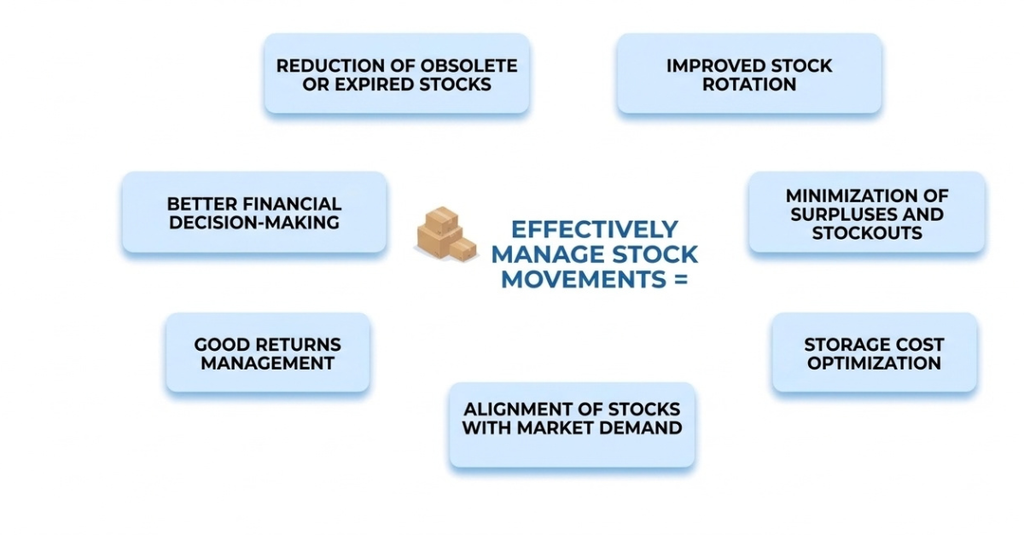
By effectively managing stock movements, you can significantly improve inventory valuation. In other words, your business can maintain optimal inventory levels while maximizing the value of its stock. Here are some of the key benefits of effective stock movement management:
Reducing Obsolete or Expired Inventory
By optimizing stock movements, a business can ensure that older items or products approaching their expiration date are used or sold first, following the FIFO (First In, First Out) principle. This helps reduce losses caused by obsolete or expired products.
Improving Inventory Turnover
Faster inventory turnover means products spend less time in the warehouse, reducing holding costs and increasing inventory profitability.
Minimizing Overstock and Stockouts
Effective stock movement management helps prevent both excess inventory and stockouts. Your business avoids unnecessary overstocking, freeing up cash while ensuring that products remain available when needed.
Optimizing Storage Costs
By adjusting inventory levels according to actual needs and limiting unnecessary stock, effective management helps reduce storage costs. This makes it possible to maintain optimal inventory levels without incurring excessive expenses.
Aligning Inventory with Market Demand
Well-managed stock movements make it easier to align supply with demand. In other words, your business has the right products available at the right time. This can increase sales opportunities and improve customer satisfaction.
Managing Returns Effectively
Efficient stock movement management also helps streamline returns. Returned products can be identified quickly, storage space can be optimized, and items that can be resold or reused can be easily added back into inventory. This reduces processing times and costs, improves traceability, and minimizes errors.
Making Better Financial Decisions
Accurate and efficient stock movement management provides reliable information for inventory valuation in the company’s financial statements. This gives businesses a clearer view of their inventory value and supports better financial decision-making.
Common Challenges in Managing Stock Movements
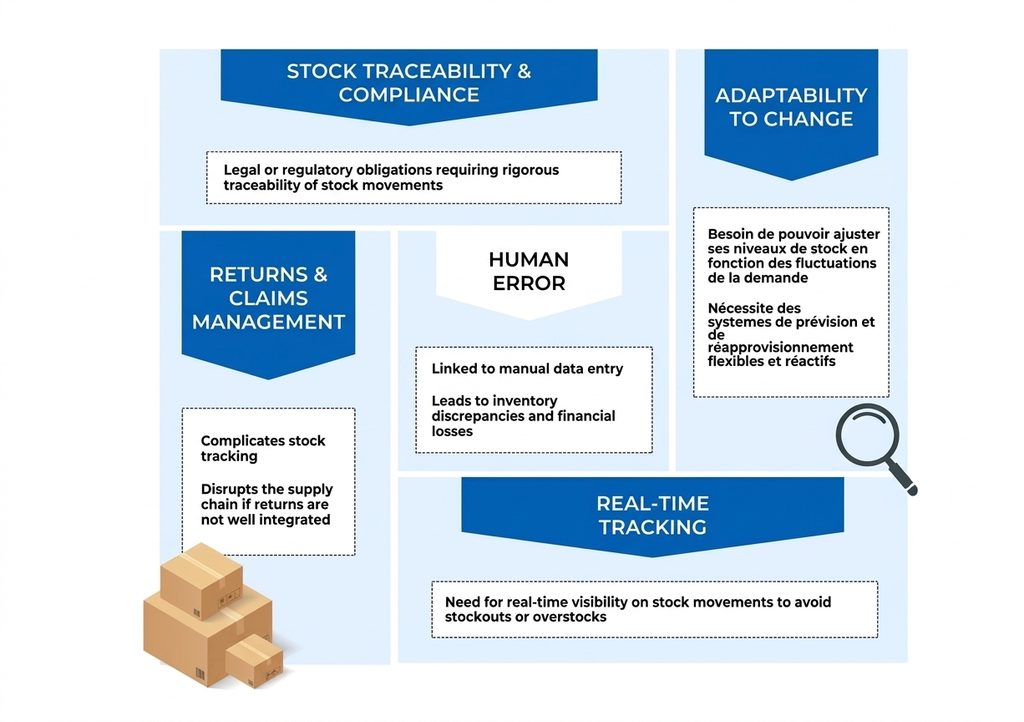
Stock movements can have a significant impact on operational efficiency. Businesses therefore need to be able to address several key challenges:
- Human error, particularly errors caused by manual data entry, is common and can lead to inventory discrepancies and financial losses.
- Managing returns and claims: this involves processing returned products, which can make inventory tracking more complex and disrupt the supply chain if returns are not properly integrated into inventory processes.
- Adapting to changes: businesses need to adjust inventory levels quickly in response to fluctuations in demand to avoid overstocking or stockouts. This requires flexible and responsive forecasting and replenishment systems.
- Real-time tracking: businesses need real-time visibility into stock movements to prevent stockouts and excess inventory.
- Inventory traceability and compliance: businesses may be subject to legal or regulatory requirements that require rigorous tracking of stock movements, particularly in sensitive industries such as food and pharmaceuticals.
How Does Inventory Management Software Optimize Stock Movements?
As mentioned above, human error and other challenges can make stock movement management more difficult. Using inventory management software helps minimize these errors by automating inbound and outbound stock processes while improving data accuracy and traceability.
Logistiqa, a comprehensive SaaS solution designed to meet the needs and budgets of small and medium-sized businesses, helps address your stock movement management requirements. It allows you to reduce errors, save time, and anticipate stockouts. Stock movements are updated after every purchase and sales order. You also receive alerts and notifications to help anticipate stockouts and overstocking.
The software also allows you to generate detailed reports to optimize inventory management and improve cash flow, while keeping your inventory valuation up to date in real time. Ultimately, you can improve your overall performance and identify your best customers and top-selling products to refine your sales strategy.
Logistiqa is an intelligent solution for managing your small business in real time.
Contact us by email info@logistiqa.co