
Storage Costs: Definition, Calculation and Optimization for Small and Medium-Sized Businesses

In B2B business management, inventory is much more than a reserve of products: it is an asset that ties up resources, takes up space, and generates costs. These expenses, known as storage costs, have a direct impact on your company’s profitability and cash flow.
Yet, this cost is often underestimated by small and medium-sized businesses, leading to reduced margins or poorly calibrated purchasing decisions.
In this article, we will look at what storage costs actually include, how to calculate them, and, most importantly, how to optimize them to improve your competitiveness.
Understanding Storage Costs
Storage costs refer to all expenses associated with storing products in a warehouse over a given period. They include more than just rent or the depreciation of your building. They also cover the energy required for heating and lighting, facility maintenance, labor costs for handling products, insurance to protect your goods, and even the loss of value that certain goods may experience over time.
In other words, every day a product remains in inventory comes with a cost. For example, if you distribute electronic components, keeping a model in stock long after its market launch can make it obsolete. In the food industry, poor inventory turnover can lead to losses when products reach their expiration dates. These are hidden costs that may go unnoticed until they turn into financial losses.
The Different Types of Storage Costs
Behind the simple idea of “keeping products in storage” are actually several types of expenses. Identifying them is essential to understanding why storage costs can quickly add up, even when the warehouse is not operating at full capacity.
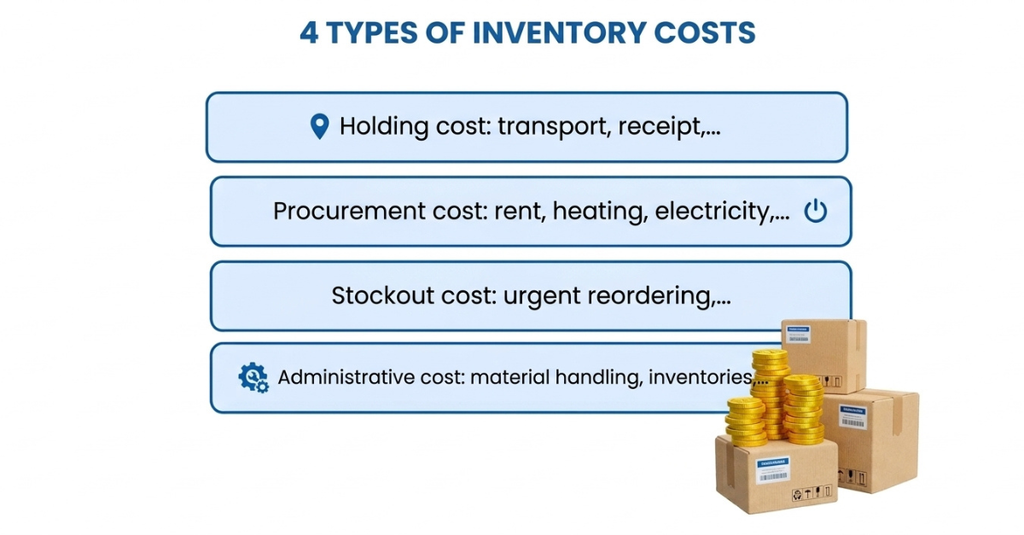
Four main categories can be identified:
- Preparation costs: These arise even before the product is stored in the warehouse. They include all operations related to orders and replenishment, such as administrative processing, communication with suppliers, transportation, receiving, and inspecting goods.
- Holding costs: These are the costs associated with keeping goods in inventory. They include space rental or depreciation, property taxes, heating, electricity, maintenance, and more. The longer an item remains in storage, the higher these costs become.
- Inventory management costs: These cover day-to-day operations such as handling, inventory counts, the use of stock management tools, and the loss of product value over time.
- Stockout costs: These occur when inventory runs out. Emergency replenishment is generally more expensive, not to mention the potential loss of sales and customer dissatisfaction.
Understanding these different types of costs helps you identify the most expensive areas and focus your efforts on reducing your overall storage expenses.
Why Measuring Storage Costs Is Essential
Failing to track storage costs is like managing your business with only a partial view of its financial situation. Excess inventory ties up cash that could otherwise be used to fund projects, invest in equipment, or take advantage of strategic purchasing opportunities. On the other hand, insufficient inventory can lead to stockouts and negatively affect customer satisfaction.
By measuring these costs, you gain a reliable indicator to adjust your order quantities, plan replenishment, and improve product turnover. This not only helps reduce unnecessary expenses, but also strengthens your competitiveness in a market where every margin point matters.
If you would like to explore the topic further, our guide on inventory optimization explains the key levers you can use to find the right balance.
How to Calculate Storage Costs
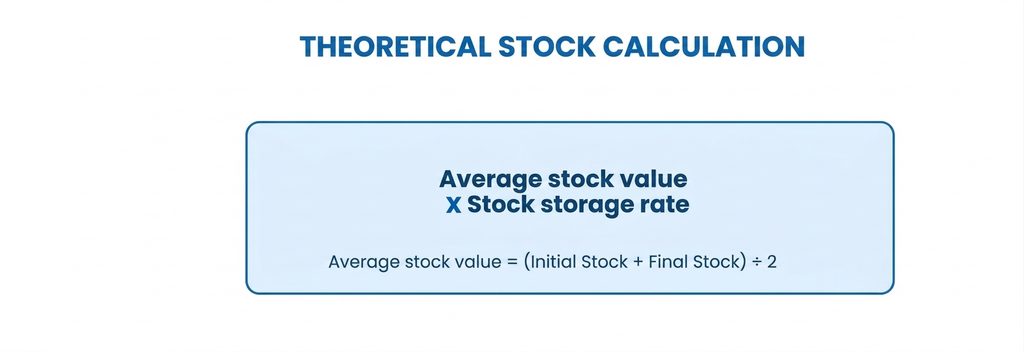
The most commonly used formula is based on two elements: the average inventory value and the storage cost rate. It can be expressed as follows:
Storage Cost = Average Inventory Value × Storage Cost Rate
The average inventory value is calculated using the average inventory formula:
Average Inventory = (Opening Stock + Closing Stock) ÷ 2
Let’s look at a practical example. Suppose you start the year with MAD 400,000 worth of inventory and end the year with MAD 600,000. Your average inventory value would therefore be MAD 500,000.
If your storage cost rate is estimated at 20%—including rent, insurance, energy, and other expenses—your annual storage cost would be MAD 100,000.
This calculation can be refined further. For example, you can apply a different rate to each product category using the ABC method, or add specific costs for certain items, such as refrigeration or specialized handling.
Optimizing Storage Costs on a Daily Basis
Factors That Affect Storage Costs
Storage costs are not fixed: they depend on many factors specific to your business.
The volume of inventory and its turnover play a key role. A product that remains on the shelves for six months costs more to store than one sold within a few weeks. The nature of the product also affects storage costs: bulky or fragile items require more space or specific storage conditions.
The location of your warehouse also has a significant impact. The cost per square meter of logistics space in an urban area is not the same as in the outskirts.
Finally, seasonal fluctuations and your procurement strategy—whether you make large purchases at discounted prices or operate with just-in-time inventory—can cause your overall storage costs to vary.
4 Ways to Optimize Your Storage Costs
The first step in reducing storage costs is to adjust your inventory levels. By calculating an appropriate safety stock level, you can avoid unnecessarily filling your shelves while still maintaining enough inventory to meet demand.
Next, it is essential to improve inventory turnover. Identifying slow-moving items allows you to limit purchases of these products, clear them through promotions or targeted sales, and focus your resources on the most profitable items. The ABC method is particularly effective for prioritizing your efforts.
Inventory valuation is another important lever. By choosing an appropriate method, such as FIFO, LIFO, or weighted average cost, you can obtain a more accurate view of your inventory value and, consequently, its actual cost.
Finally, optimizing your warehouse is essential to minimize costs. Every unused square meter represents paid space that generates no value. By redesigning your layout, workflows, and storage organization, you can store products more efficiently—and at a lower cost.
Making effective use of your management data is also crucial. With reliable, up-to-date information about your inventory, purchases, and sales history, you can make informed decisions, reduce overstocking, and improve overall profitability.
Common Mistakes to Avoid
Certain practices can distort storage cost calculations or increase your expenses without you realizing it.
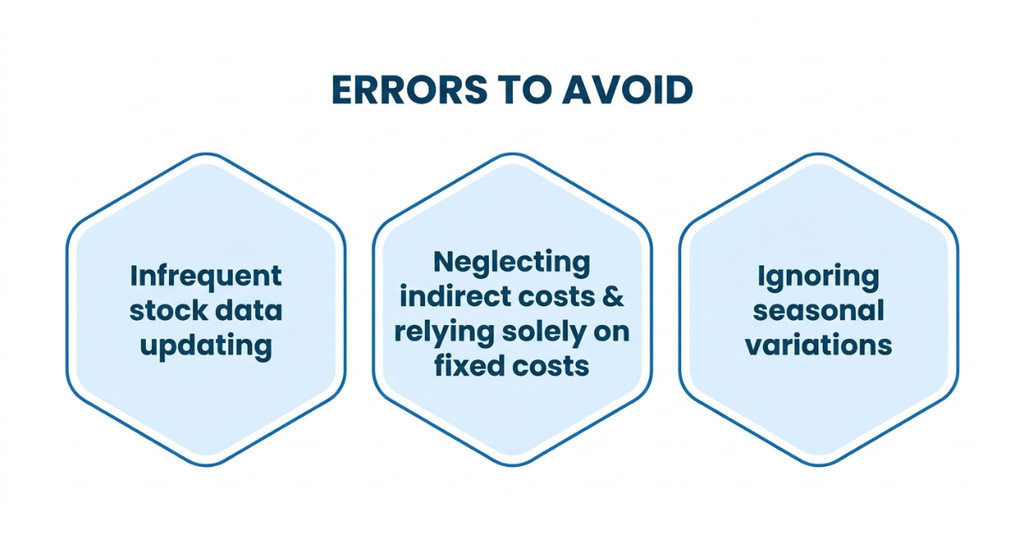
One of the most common mistakes is failing to account for all storage-related costs. Some businesses focus only on fixed costs such as rent or insurance, while overlooking indirect and variable expenses: electricity, maintenance, additional handling during peak periods, or specific costs such as cold-chain storage or specialized packaging. As a result, actual storage costs are underestimated, which can distort both calculations and purchasing decisions.
Another common issue is failing to update inventory data regularly. An incomplete or outdated inventory count gives an inaccurate picture of average inventory value. This can lead to ordering more than necessary—or, conversely, experiencing unexpected stockouts.
It is also risky to ignore seasonal fluctuations. For example, excess inventory at the end of a season can tie up cash for several months. Conversely, failing to anticipate increased demand during peak periods can lead to costly shortages.
In short, accurate and regular monitoring of all storage cost components is essential to avoid these pitfalls and make purchasing decisions that are genuinely cost-effective.
Logistiqa: Simpler, More Controlled Inventory Management
With Logistiqa, businesses gain a centralized view of their inventory and stock movements. The solution allows you to track product receipts and issues while providing up-to-date information to better understand how your inventory is evolving.
This visibility also makes it easier to analyze average inventory levels and estimate storage-related costs. By tracking the movement of goods more effectively, you can identify inventory that remains unused for too long and anticipate your replenishment needs.
Logistiqa also centralizes purchasing, sales, and inventory information in a single environment. This organization helps limit overstocking and reduce the risk of stockouts, while making it easier to monitor product turnover.
Whether you manage raw materials, finished products, or a wide range of commercial items, Logistiqa helps you structure your data and maintain better visibility over your operations. All your information is brought together in one place, making daily monitoring easier.
By centralizing data and reducing manual tracking, Logistiqa helps you save time and minimize data entry errors. You can then focus more on managing your business and growing your company.
Contact us by email info@logistiqa.co