
Shrinkage Rate: How to Identify Hidden Inventory Losses

Stock discrepancies, quantities shown in the system that do not match what is actually in the warehouse, or missing products discovered too late during inventory counts: these situations are common among B2B small and medium-sized businesses. They are not always the result of poor overall management. More often, they are caused by gradual losses that are difficult to detect, accumulate over time, and directly affect profitability and operational reliability.
This is where the shrinkage rate becomes particularly useful. This indicator measures inventory losses related to storage, logistics, or internal processes. In this article, we will define the shrinkage rate, explore why it occurs, examine its impact, explain how to calculate it, and, most importantly, look at how to reduce it sustainably through good practices and the right tools.
What Is the Shrinkage Rate?
The shrinkage rate refers to the loss of goods recorded over a given period. In logistics, storage, or warehouse operations, it covers all negative inventory discrepancies caused by missing, damaged, or unsellable products.
It is important to distinguish shrinkage from other related concepts. Unknown shrinkage mainly refers to theft or unexplained disappearances, while declared losses include identified events such as damaged or expired products. The shrinkage rate encompasses all of these losses whenever they create a gap between what is recorded in the system and what is actually available.
This concept is closely linked to theoretical stock. Theoretical stock represents the inventory level calculated from recorded stock movements, including supplier receipts, sales, returns, and transfers. Shrinkage occurs precisely when this theoretical stock no longer matches the physical stock on hand. A data entry error, an unreported damaged product, or an incorrectly recorded return can be enough to create a discrepancy that, when accumulated over time, distorts the overall view of inventory levels.
In day-to-day inventory management, the logistics shrinkage rate is therefore a key performance indicator. It helps measure data accuracy, identify operational issues, and take corrective action before losses become structural.
Why Does Shrinkage Occur in Businesses?
Shrinkage is never simply a matter of chance. It is most often the result of a combination of factors related to storage, internal organization, and logistics flows.
In the warehouse, shrinkage can result from breakage, damage, or inadequate storage conditions. Products that are handled incorrectly, stacked improperly, or stored for too long may become unsellable without being immediately removed from the theoretical inventory.
Organizational issues also play a major role. An entry error when receiving or shipping goods, a failure to record a transaction, or a non-standardized process can create a lasting gap between actual inventory and theoretical stock.
Finally, logistics flows, such as order-picking errors, poorly handled customer returns, or unrecorded internal transfers, can contribute to the accumulation of discrepancies.
These situations are particularly common in businesses with limited real-time inventory tracking tools.

The Practical Consequences of a High Shrinkage Rate
A Direct Impact on Margins and Profitability
A high shrinkage rate has a direct impact on margins. Every product that is lost or damaged represents an immediate financial loss that is not always clearly reflected in the accounts.
Negative Effects on Cash Flow and Procurement
Cash flow is also affected. Inventory that is recorded but cannot actually be used represents lost revenue and can also lead to unexpected stockouts. These imbalances make purchasing and replenishment planning more difficult.
Reduced Data Accuracy and Impact on Customer Relationships
There is also a decline in inventory data accuracy. Sales teams may sell products that are actually unavailable, which can damage customer relationships and satisfaction. Decisions based on inaccurate data can gradually lead to broader disorganization in inventory management.
How Do You Calculate the Shrinkage Rate?
The shrinkage rate is calculated by comparing theoretical stock with the actual stock recorded during a physical inventory count. It measures the volume or value of losses over a given period, relative to the initial stock or average stock.
The most commonly used formula is:
Shrinkage Rate (%) = ((Theoretical Stock − Actual Stock) / Theoretical Stock) × 100
A high result indicates that a significant amount of inventory has been lost without being identified or properly recorded. Ideally, businesses should aim for a result as close to 0% as possible.
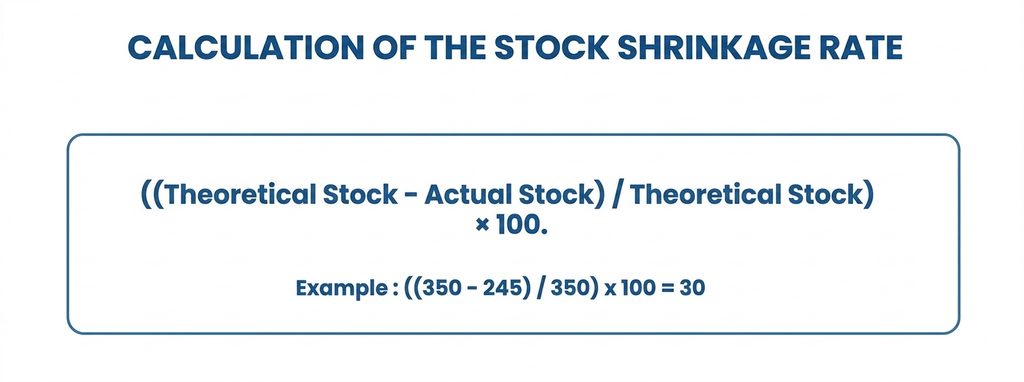
The higher the shrinkage rate, the more unidentified or unrecorded losses there are.
This calculation highlights the central role of theoretical stock. If incoming and outgoing stock movements are not recorded correctly, the resulting shrinkage rate will not accurately reflect reality. It is therefore essential to define a consistent analysis period and rely on reliable data.
A one-time calculation provides a snapshot of your inventory data at a specific point in time. However, only regular monitoring of the inventory shrinkage rate makes it possible to identify trends, detect deviations, and implement lasting corrective actions.
How Can You Reduce and Prevent Inventory Shrinkage?
Structure and Improve the Reliability of Inventory Management Processes
Reducing shrinkage starts with better organization of receiving, storage, and shipping processes. Every stock movement should be recorded systematically to ensure the accuracy of theoretical stock. Using unique product references and a barcode scanner is also recommended to prevent data entry errors.
Improve Flow Monitoring and Inventory Turnover
Rigorous monitoring of inventory flows is essential for minimizing discrepancies. In this context, inventory turnover also plays an important role. Products that remain in the warehouse for long periods are more exposed to the risk of damage, obsolescence, or handling errors. Monitoring the inventory turnover rate helps identify slow-moving products and take action early to reduce their exposure to shrinkage.
Conduct Regular, Targeted Inventory Counts
Regular inventory counts are another essential measure. They allow businesses to compare theoretical stock with the actual stock on hand and quickly correct discrepancies. Cycle counts, carried out by warehouse zones or product categories, are often more effective than relying on a single annual inventory count.
Use Digital Tools for Greater Visibility
Finally, digitalizing inventory management can significantly improve traceability and real-time visibility. The right tool helps reduce human errors and makes it easier to identify the sources of inventory losses.
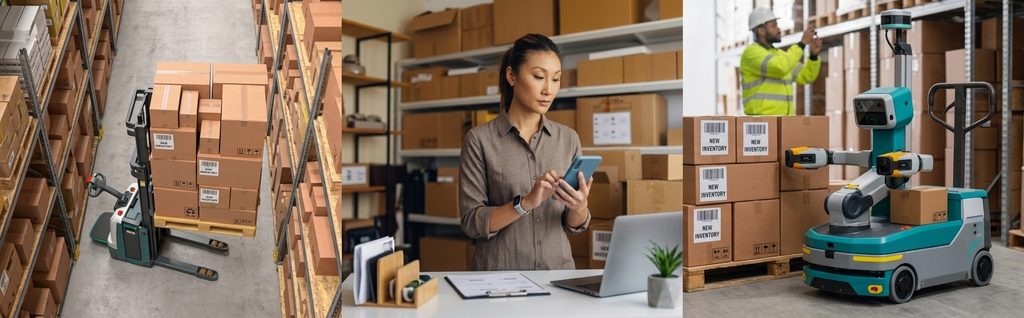
Shrinkage Rate: A Key Performance Indicator with Logistiqa
The shrinkage rate is an essential KPI for improving your logistics processes and overall performance. To be useful, however, it must be based on reliable, continuously updated data.
Logistiqa is inventory and business management software designed for B2B businesses. It centralizes sales, purchasing, and inventory on a single platform. Every stock movement is automatically recorded, ensuring that theoretical stock levels are continuously updated.
More specifically, Logistiqa provides several key features to help businesses control inventory shrinkage:
- automatic inventory updates with every stock movement (sales, purchases, etc.),
- real-time visibility into stock levels and discrepancies,
- complete product traceability throughout logistics flows,
- flexible and accurate inventory counting functionality.
By relying on reliable data and centralized management, Logistiqa helps small and medium-sized businesses sustainably reduce their shrinkage rate, improve cash flow, and turn inventory management into a genuine driver of performance.
FAQ
What Is Inventory Shrinkage?
Inventory shrinkage refers to any loss of goods identified between theoretical stock and actual stock. It can result from breakage, damage, expired products, handling errors, or incorrectly recorded stock movements. Unlike an isolated loss, shrinkage is often a gradual issue that accumulates over time.
What Is the Shrinkage Rate?
The shrinkage rate is an indicator used to measure the extent of these losses over a given period. Expressed as a percentage, it highlights the difference between theoretical stock and the stock actually available. It is used to assess the reliability of inventory management and identify potential logistical or organizational issues.
How Do You Calculate the Shrinkage Rate?
The shrinkage rate is calculated by comparing theoretical stock with the actual stock recorded during an inventory count. The most common formula is:
(Theoretical Stock − Actual Stock) / Theoretical Stock × 100
This calculation can be performed in terms of quantity or value, provided it is based on reliable inventory data.
What Is Considered a Normal Shrinkage Rate?
There is no universal shrinkage rate considered “normal.” It depends on the industry, the type of products stored, and storage conditions. In many businesses, a low and well-controlled level of shrinkage may be acceptable. However, a consistently high or increasing rate should be investigated, as it often indicates issues with processes or inventory tracking.
Contact us by email info@logistiqa.co
Posts navigation
← Theoretical Stock: Definition, Calculation and Best Practices?
→Storage Costs: Definition, Calculation and Optimization for Small and Medium-Sized Businesses ?